

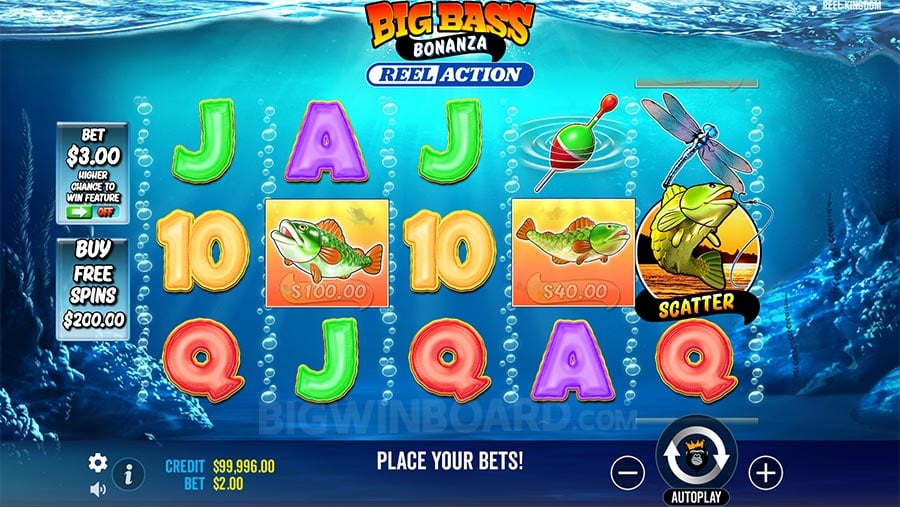
Anyone who spends time with online slots knows the real draw is that mix of volatility and potential reward. Big Bass Bonanza, with its cheerful fishing theme and that profitable free spins round, fits the bill nicely. But without a plan for the risk involved, the fun can quickly turn into a fast track to losing money. This guide walks UK players through practical, hands-on risk management tactics tailored for this specific Pragmatic Play slot. We seek to move past relying on luck alone. Alternatively, we’ll build a framework that ensures your gaming sessions last longer, keep under your control, and stay enjoyable. The aim is to keep your time with Big Bass Bonanza as a form of entertainment, not a source of financial stress.
Comprehending Variance and RTP in Big Bass Bonanza

You need to grasp the game’s mathematical foundation before you place a single bet. Big Bass Bonanza is a high-volatility slot. What does that mean for you? Wins aren’t frequent often, but when they do land, they can be much bigger. This creates a certain rhythm: long stretches where not much happens, interrupted by the chance of a major payout. That rhythm calls for patience and a bankroll that can withstand the wait. Then there’s the game’s Return to Player (RTP) rate, which is 96.71%. This figure represents the expected long-term payback to players. Just keep in mind, it’s a theoretical average over many millions of spins. Your own session could vary far away from that number. This is exactly why controlling your exposure to the game’s volatility is the foundation of playing sustainably. Let’s be clear: an RTP of 96.71% doesn’t promise you’ll get £96.71 back from a £100 stake. It’s a statistical mean. The high volatility makes the short-term variance more extreme. You could easily have a session where you see returns below 50% of your stake, or another where you see over 150%. Accepting this built-in unpredictability is your foundation for building a strategy that safeguards your bankroll from the wildest swings.

Creating a Rigid Session Budget and Holding to It
Your most powerful tool for handling risk is a session budget, set in advance and followed to without exception. Before I even start Big Bass Bonanza, I pick on an amount of money I can handle to lose completely. This is my leisure fund for that slot session, and it’s completely separate from money for essentials like rent or groceries. Once I set that number, I pledge to stopping the moment it’s gone. This custom takes the emotion out of judgments made in the heat of the moment. Trying to win back losses by exceeding past your budget is the swiftest way into problem gambling territory. I also make full use of the responsible gambling tools every UK-licensed casino provides. Deposit limits and session reminders serve as a digital enforcer for the limits you set. A trick I employ is to transfer only my session budget into my casino wallet, then log out of my e-wallet or banking app. That forms a clear, physical separation. I also treat this budget as final for at least the next day, which blocks me from making impulsive “top-up” deposits after a bad run. Converting your budget from a loose idea into a concrete rule alters how you connect with the game and its risks on a fundamental level.
Choosing Your Stake Size Carefully Compared to Balance
Your wager size is the main control you have for controlling risk. In Big Bass Bonanza, your coin value and bet level establish your total stake per spin. I work on a core rule: my bet should be a small fraction of my total session bankroll. I usually aim for between 1% and 2%. For example, if my session budget is £50, I’ll keep my bet per spin at £0.50 or a highest of £1.00. This approach lets me survive the inevitable losing streaks you get with high-volatility games without having my funds disappear. It also provides me sufficient spins to possibly activate the lucrative bonus features. Staking too high versus your balance shoots your risk of ruin significantly up and shortens your gameplay. You’ll frequently end up disappointed before the game even has a chance to show what it can do. Consider betting £2.50 per spin with that £50 budget. A standard 20-spin losing streak would wipe out half your money, creating huge stress. But a £0.50 bet offers you 100 spins, which theoretically enhances your odds of hitting a bonus round. This strategy is about persistence. It allows you to weather the game’s volatility curve rather than getting destroyed by its steepest drops.
The Significance of Time-Limited Session Limits
In addition to money limits, setting a time limit is a hugely effective tactic that many players ignore. I always configure a timer or alarm before I start playing. Even with small bets, playing for too long results in fatigue and poor judgement, which can lead you to give up your own strategy. A time limit, say 30 or 60 minutes, creates a natural break to step back and reflect. This pause is crucial. It pulls you out of the game’s immersive world, allows you to check your remaining bankroll, and allows you to make a conscious choice to continue or to cash out. This routine stops you from drifting into autopilot during long sessions, where you might just click spin mechanically without considering about your total spend or your current mood. It’s a safeguard against extended periods of loss. In my own practice, I employ this break to ask a few quick questions: Am I still having fun? Am I chasing losses? Has my bet size slowly crept upward? That moment of reflection is a strong circuit breaker. The repetitive spins and flashy graphics can have a entrancing effect, diminishing your sense of risk and analysis if you don’t interrupt it.
Identifying and Quitting During Losing Streaks
Slots like Big Bass Bonanza are designed to have extended phases without a significant win. The psychological test is to view these certain downturns for what they are. You must refrain from seeing them as a private failure or a sure sign that a large win is just around the corner. My strategy involves setting a mental “circuit breaker” point. If my bankroll falls by a fixed percentage, say 50% of my starting budget, without any indication of rebound or a bonus trigger, I view that as my cue to stop. Spinning on while you’re irritated or desperate to “get back to even” clouds your decision-making. That state of mind nearly always leads to poorer outcomes. Recognising that some sessions will be unsuccessful sessions is a core part of gambling discipline. Stepping back protects what’s left of your money for another day. It’s vital to grasp the game’s random number generator has no awareness. A long losing streak does not render a win on the next spin more likely. That “gambler’s fallacy” is a dangerous trap. By setting your exit point before you begin, you make the decision to quit a logical one. You make it before sentiments like frustration or false hope can overwhelm.
Recognizing When to Collect Winnings
Managing your wins is just as important as controlling your losses. The excitement of a big win, particularly from the free spins feature with those increasing fish symbols, can generate a strong urge to keep playing for even more. This is where a clear profit-target strategy becomes crucial. I set beforehand what I’ll view as a “good win”. For me, that might be multiplying my initial session budget. Once I hit that target, I promptly cash out a large portion of the winnings, guaranteeing a profit. I might retain a smaller portion available to keep playing, but the key principle is to bank the gains. The game’s RTP is a long-term average; a large win is a positive statistical blip. If you omit to secure profits and put all your winnings back into the game, you’ll often just give them back. The mathematics of the slot will even out over continued play. One specific strategy I use is the “50% rule”. When I achieve my profit target, I withdraw at least half of my total net winnings. This actually takes the money out of the gaming setting, turning it into real, secured profit. It also provides you a psychological boost, converting abstract casino credit into something tangible. That feeling is far more rewarding than watching a number fluctuate around on a screen.
Utilising Demo Play to Learn Game Mechanics
One of the top risk-free resources available to UK players is the demo, or free-play, version of Big Bass Bonanza. I always spend a good duration of time in this mode before I wager real cash. It lets me understand the game’s mechanics inside out: how often the free spins initiate, how the Money Symbol feature functions, and the general tempo of wins and losses. This insight is essential for risk management. By feeling the game’s volatility pattern without financial risks, I can set achievable expectations and formulate a betting strategy I’m confident with. It eliminates the element of surprise. I can then tackle real-money play with a collected, analytical head rather than an emotional one. That outlook is the basis for making disciplined decisions. For instance, after extended demo play, you might observe the free spins round can sometimes require more than 200 spins to initiate. That finding highlights why you must have a sufficiently large bankroll and a small bet size. This hands-on, pressure-free analysis is an asset. It yields results by helping you prevent expensive beginner mistakes when you switch to playing for real.
Controlling Emotional Control and Enjoyment
Risk management involves more than money. It is tightly linked to maintaining your emotions in check. Big Bass Bonanza’s bright graphics and catchy sounds are crafted to draw you in, but you need to keep a level of detachment. I always monitoring my emotional state while I play. If I detect I’m getting overly anxious during a dry spell or overly excited after a win, I view those as warning signs. The goal is to view slot play as a form of leisure entertainment, not an emotional rollercoaster or a solution to money problems. Making the experience fun means staying in control. That means incorporating regular breaks, not playing when you’re stressed or upset, and always focusing on the fun of the gameplay itself over a frantic hunt for a payout. One technique I use is to ask myself, “If this were a paid show, would I be happy with my ticket price right now?” If the thrill of the spin and the anticipation have been replaced by tension or desperation, it’s a clear indication to stop. This shift in mindset, from seeing yourself as an investor to seeing yourself as a consumer of entertainment, could be the deepest risk management strategy there is.
Leveraging Casino Bonuses and Promotions Wisely
Numerous UK online casinos give bonuses like free spins or deposit matches you can use on Big Bass Bonanza. These can extend your playtime, but they come with strict wagering requirements and terms you must comprehend. I always check the full terms and conditions. Pay special attention to the wagering multiplier (like 35x), the game weighting (slots usually account for 100%, but always check), and any maximum bet restrictions. Using a bonus with a high wagering requirement on a high-volatility game can be dangerous. The variance can eliminate the bonus funds before you meet the playthrough terms. I use bonuses strategically to get more play for less of my own money, but I never consider them as a surefire route to profit. Their main purpose is risk reduction. They enable me try the game with less of my own capital on the line. For example, a set of 20 free spins on Big Bass Bonanza gives me a chance at triggering the bonus round without making a deposit. That’s valuable insight and entertainment at zero cost. Still, I’m always careful with offers that look too good to be true. They often carry the toughest playthrough conditions, which can trap you into a cycle of high-risk wagering.
Bringing all this together, smart risk management for Big Bass Bonanza in the UK comes down to a blend of planning before you play, disciplined execution while you play, and honest self-awareness about your emotions. When you understand the game’s high volatility, set strict money and time limits, choose sensible bet sizes, and learn when to walk away, you transform your gameplay. It transitions from a pure game of chance into a regulated leisure activity. Using demo play and bonuses wisely adds extra support to this structure. Implementing these strategies lets you enjoy the thrill of the chase in Big Bass Bonanza while actively protecting your financial wellbeing. It keeps your slot experience a sustainable form of fun.

Comment (0)